
Converting Agricultural Stubble Into Commercial Mushroom Substrate
A verified clean-tech platform replacing open-field stubble burning with high-yield button mushroom cultivation. Supported by the Ministry of MSME and MIET Meerut.
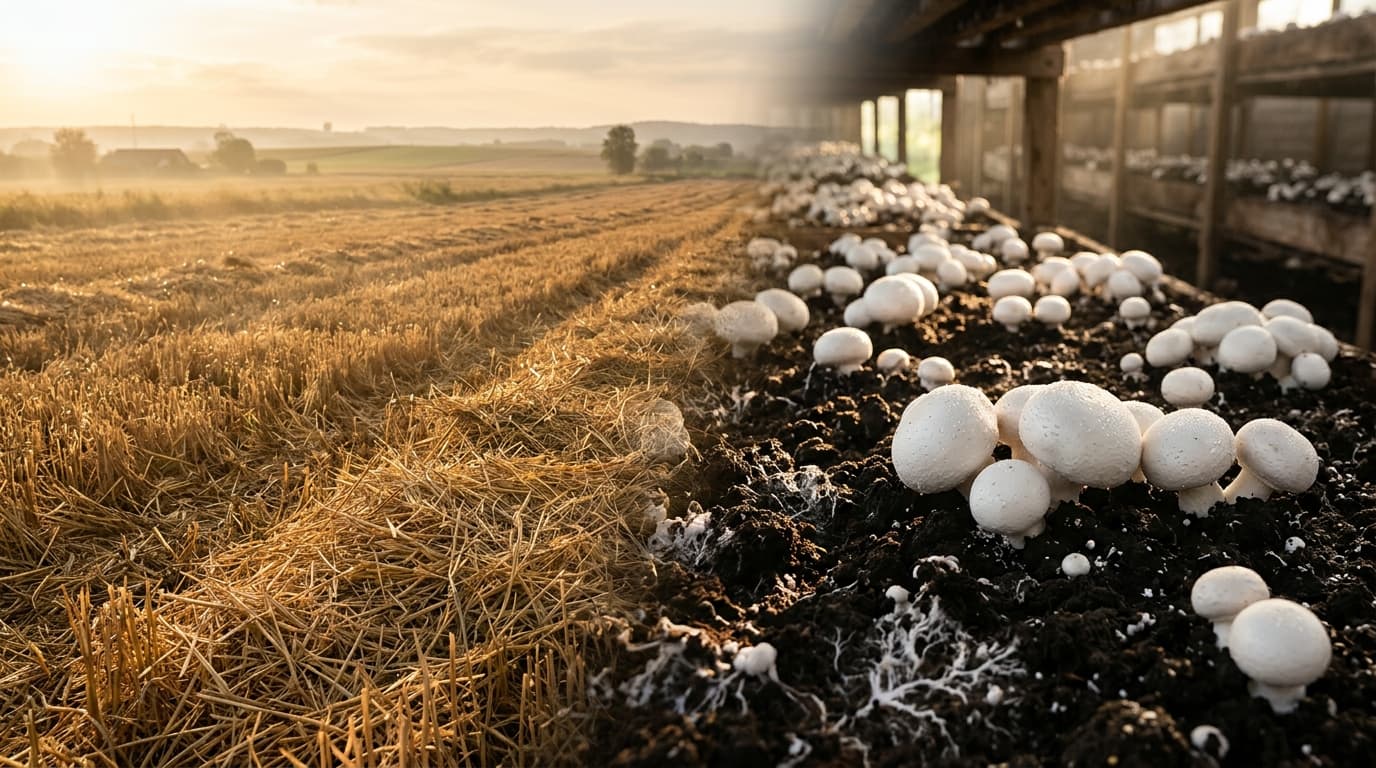
Incubation trial at Meerut Institute of Engineering & Technology (MIET).
A Commercial Alternative to Stubble Burning
Every harvest cycle, open-field incineration releases millions of tonnes of PM2.5 pollutants across North India. Straw2Shrooms redirects agricultural residue into high-margin produce.
Environmental Liability & Penalties
- Severe regional air quality degradation and winter smog alerts.
- Destruction of beneficial soil microbes and loss of organic matter.
- Legal fines and zero economic return for farming families.
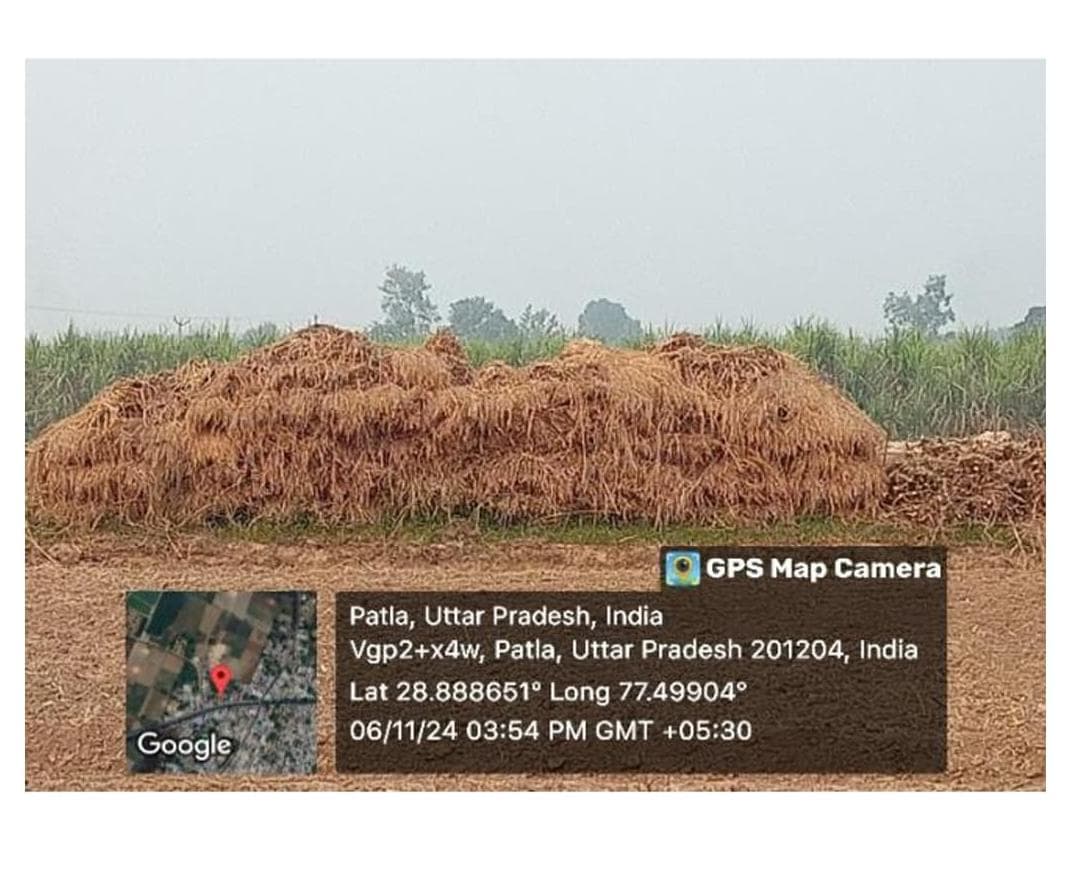
Revenue Generation & Soil Humus
- Produces fresh, high-demand Agaricus bisporus button mushrooms.
- Farmers earn ₹2,000–₹2,500/tonne of baled parali delivered to hubs.
- Spent substrate returned to farmland as certified organic humus.
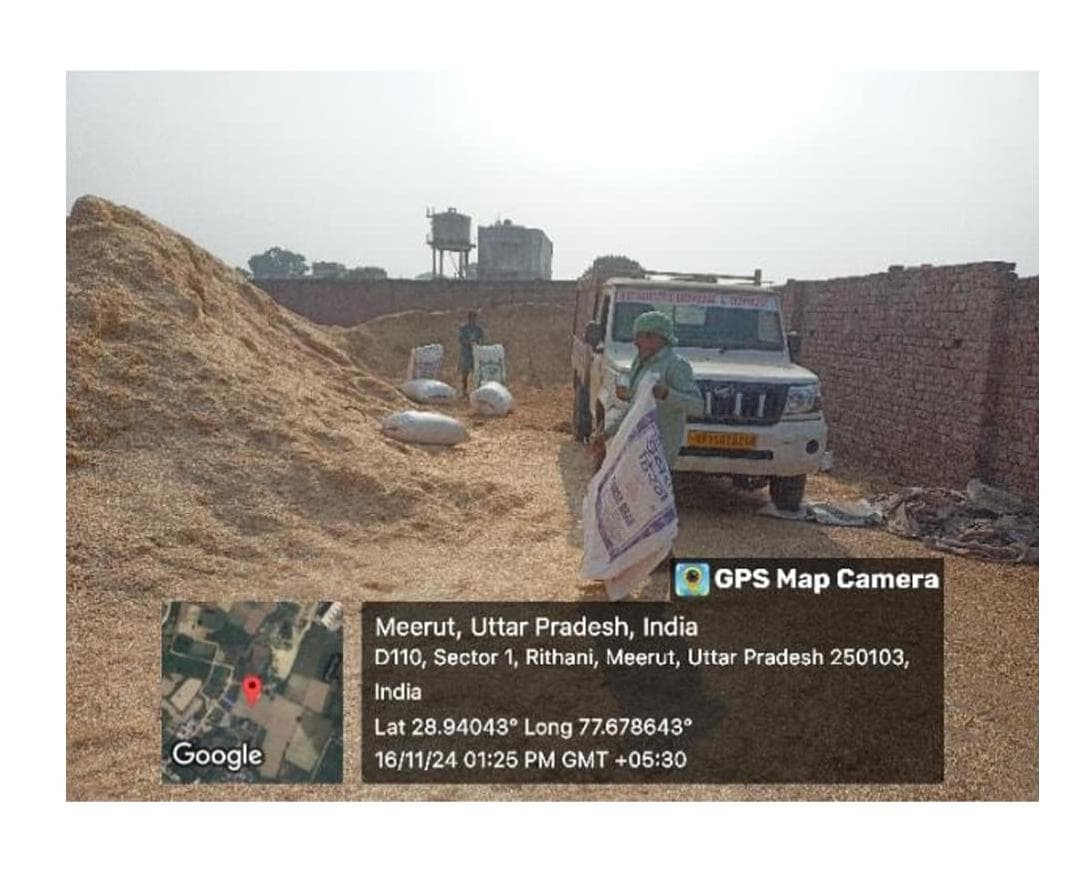
Technology Workflow
Compost Preparation
Formulated blends of paddy straw (parali) and wheat husk (bhusa), conditioned with gypsum, urea, and antiseptic formalin solution on sterilized beds.
10-Turning Management
Scheduled aeration cycles managing thermophilic heat (50–65°C), moisture balance (68%), and preventive fungicide and insecticide shielding.
Spawning & Casing
Volume-wide spawn inoculation followed by sterilized cocopeat casing, creating optimal microclimate triggers for primordia pinning.
Photographic Laboratory Evidence
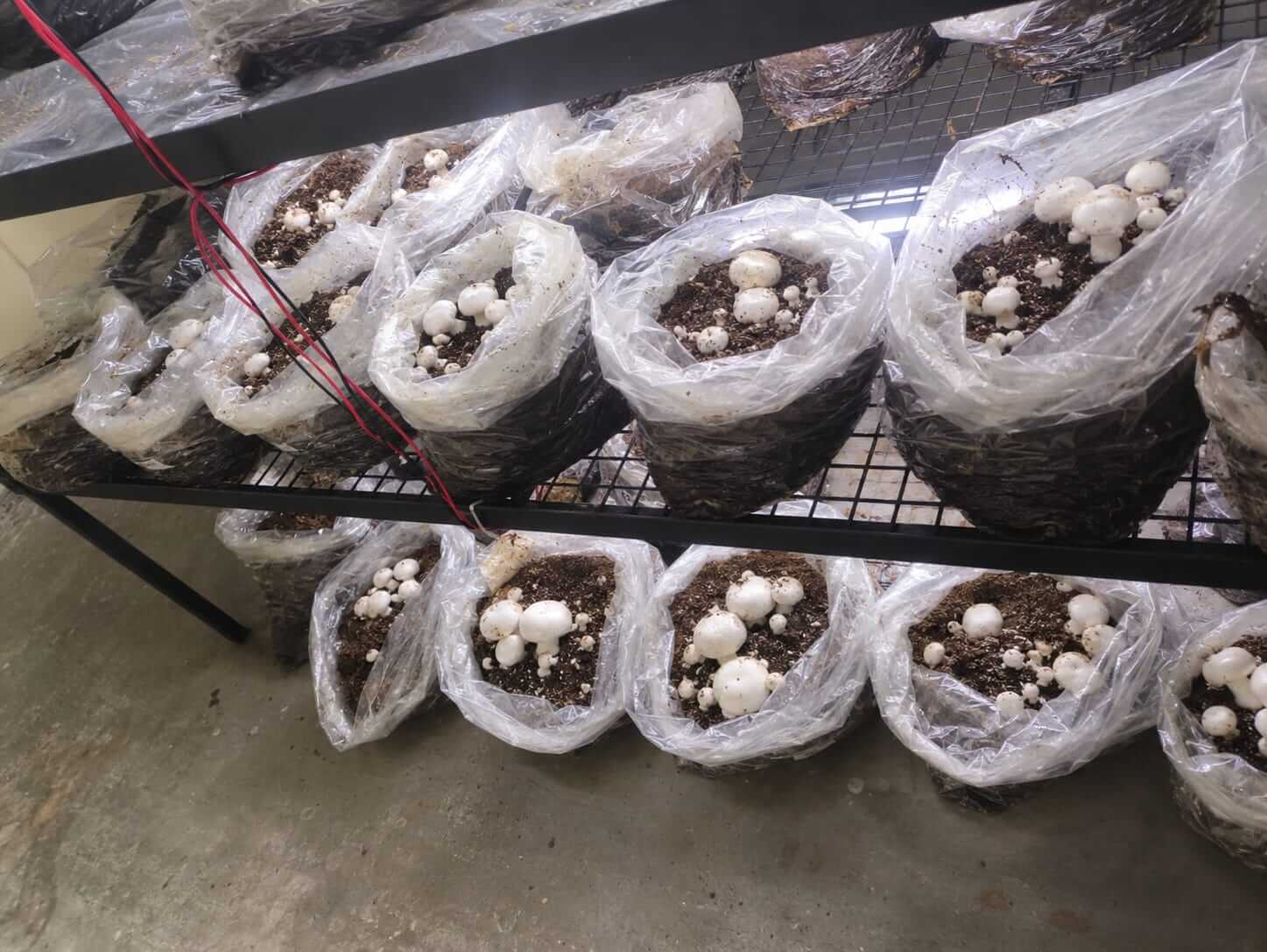
Vigorous Agaricus bisporus Fruiting
Empirical validation of high-density button mushroom caps thriving on standardized parali substrate beds.
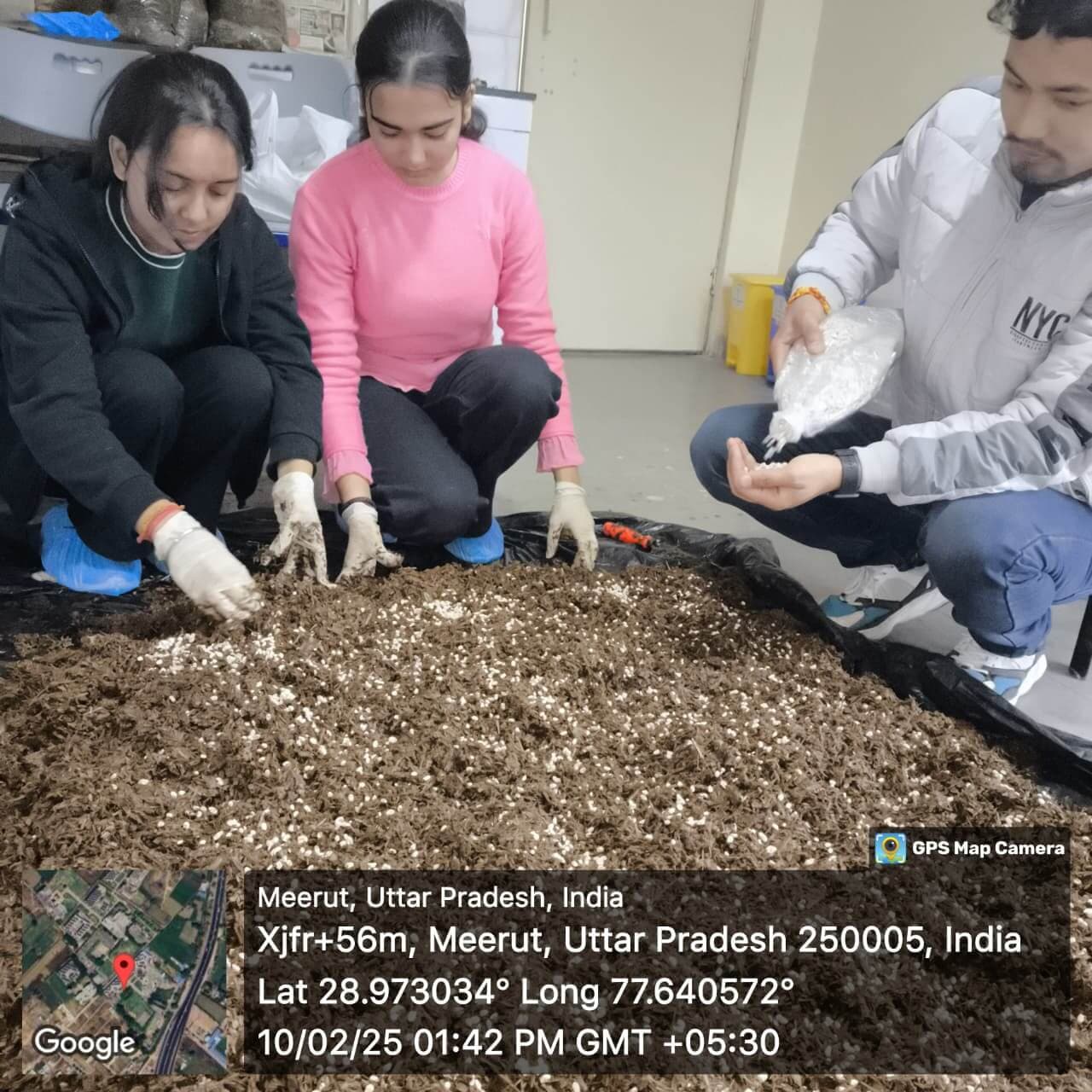
Multi-Point Inoculation Operation
Priya and research team mixing spawn into conditioned paddy straw compost at MIET Incubation Forum.
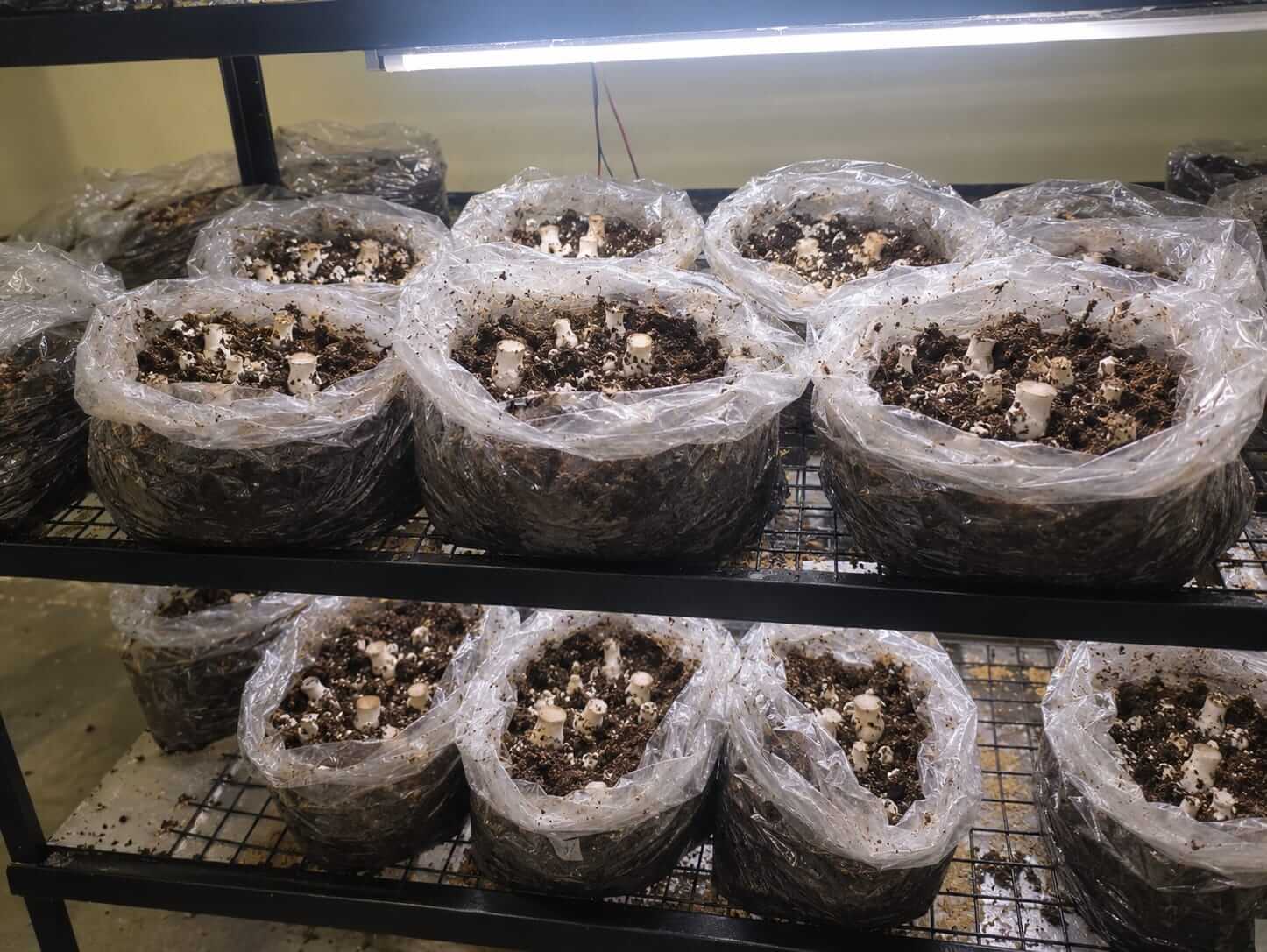
Tiered Rack Primordia Emergence
Vertical multi-tier polybag system under controlled humidity and photoperiod, maximizing yield per square meter.
5 Experimental Batches
Batch 1 (Baseline Trial)
Baseline formulation establishing the 10-turning protocol. Established high initial microbial heat with gradual gypsum integration to prevent crusting.
Exact Batch Formulation
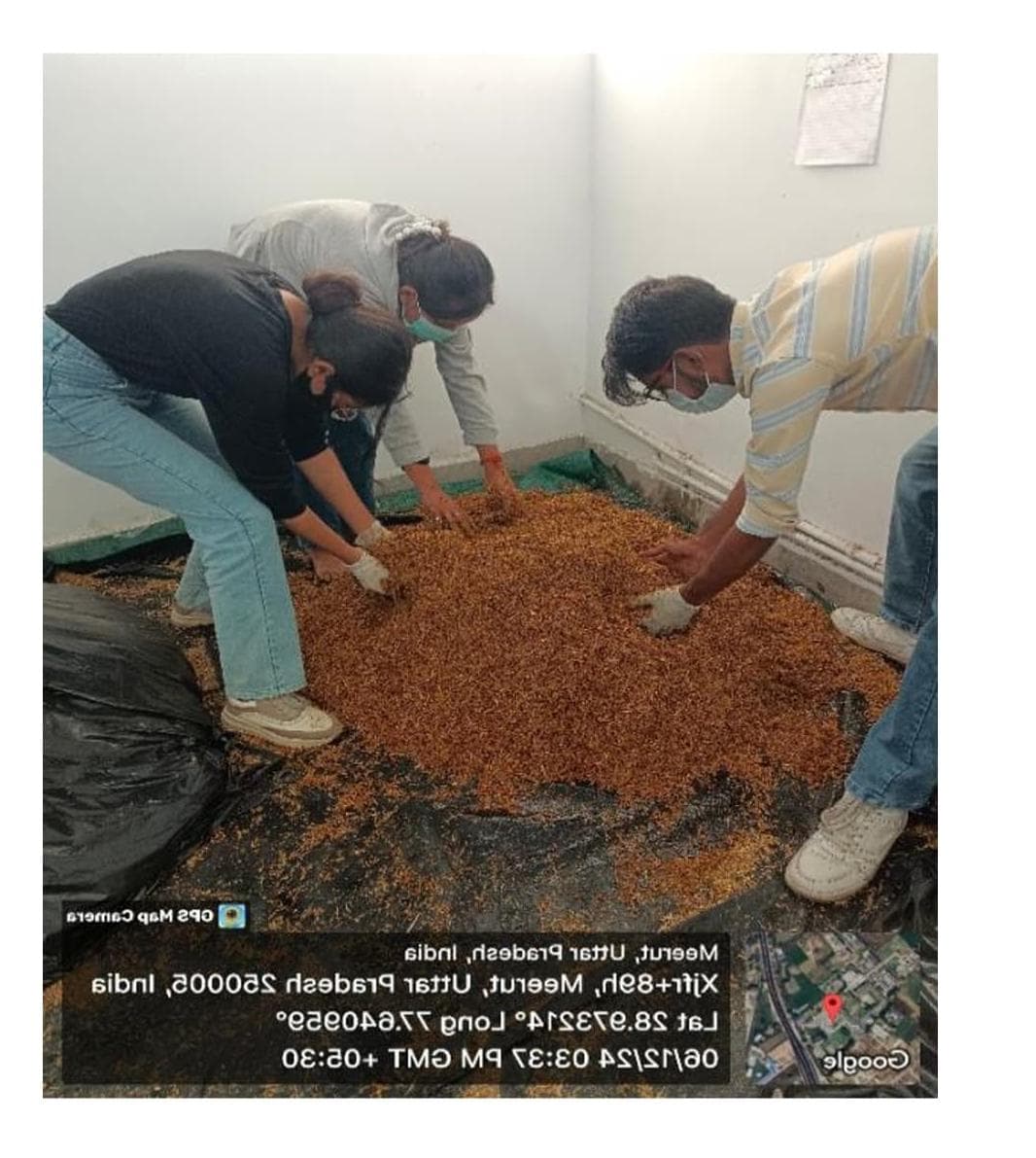
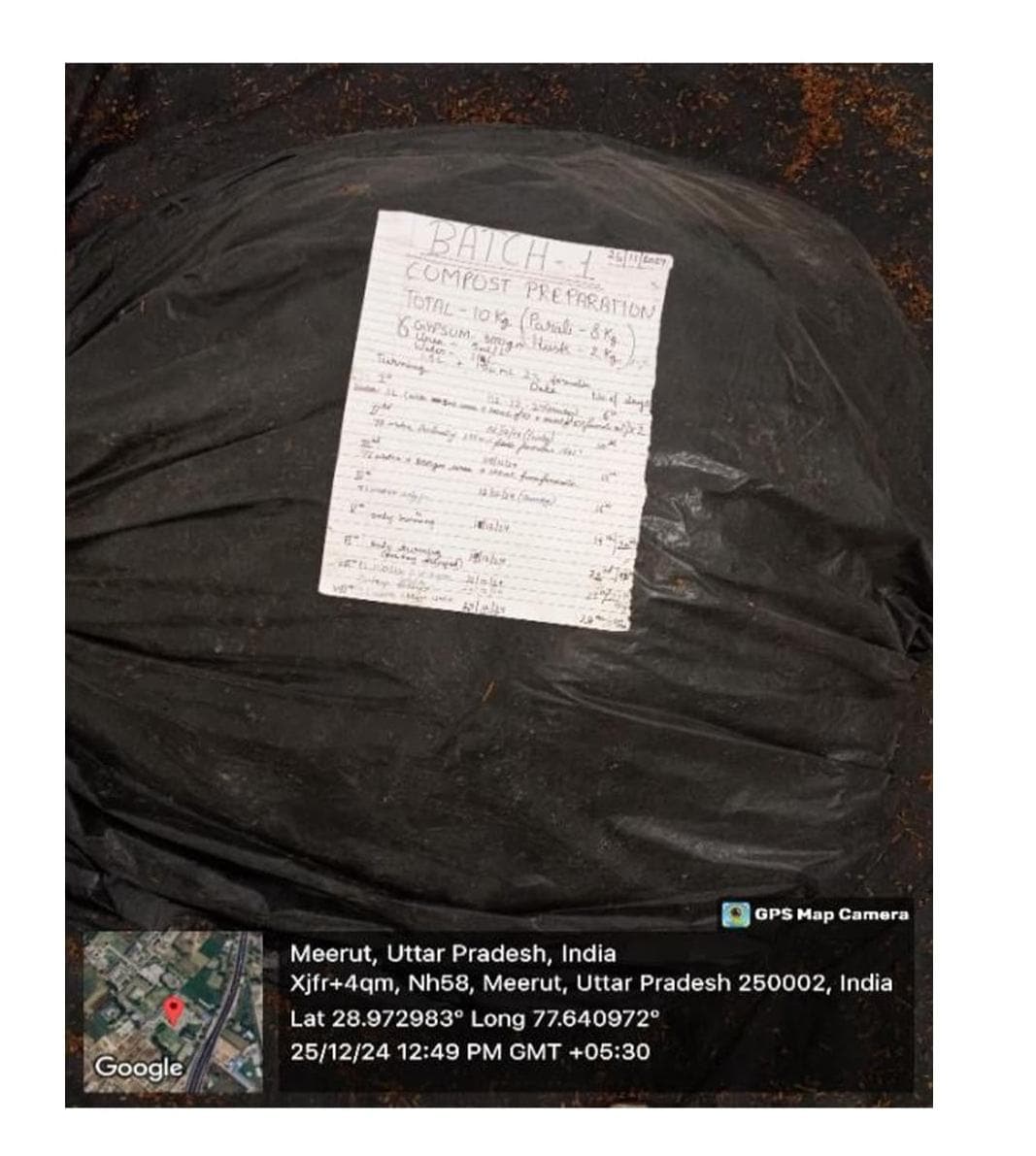
Mixing & Turning Schedule (10 Milestones)
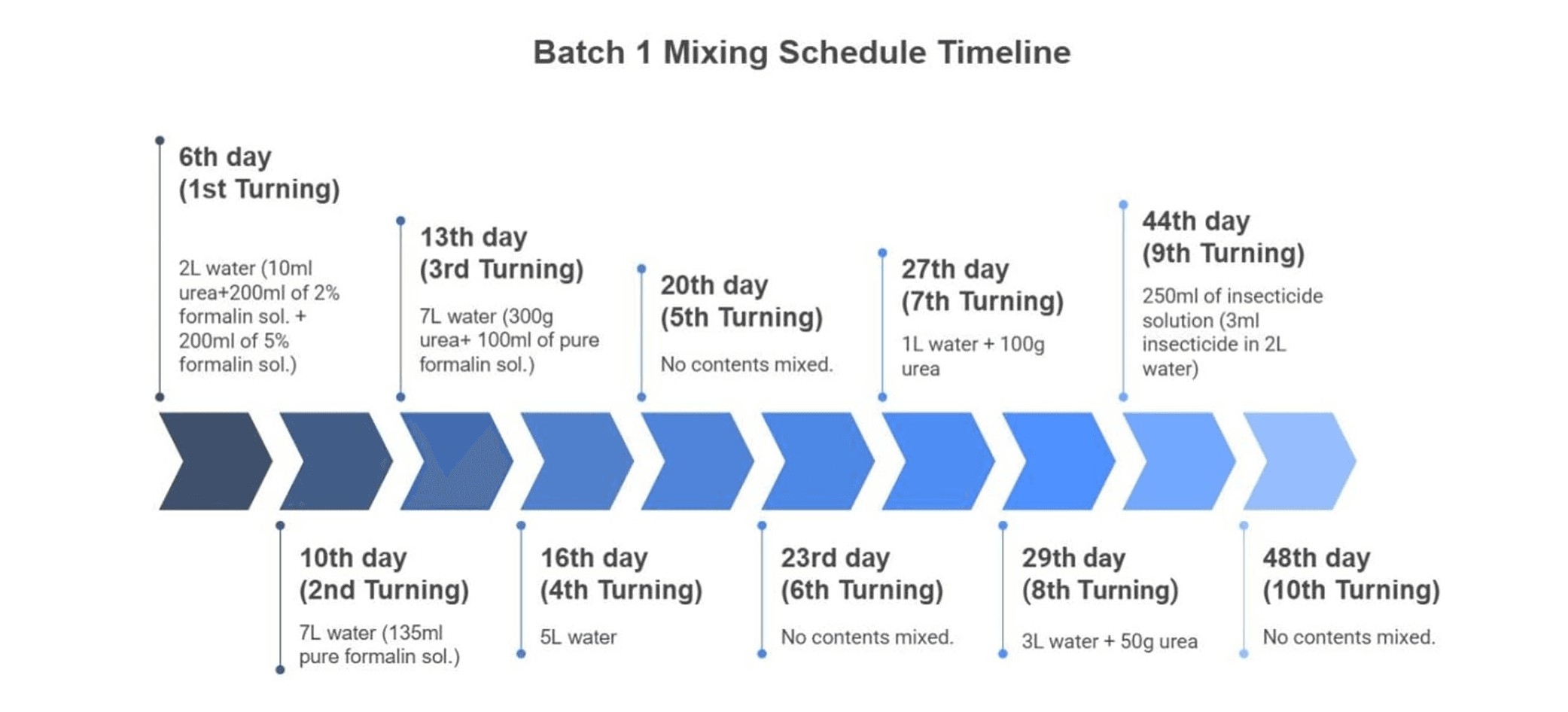
2L water (10ml urea + 200ml of 2% formalin + 200ml of 5% formalin)
7L water (135ml pure formalin)
7L water (300g urea + 100ml pure formalin)
5L water
No contents mixed (aeration & moisture check)
No contents mixed
1L water + 100g urea
3L water + 50g urea
250ml insecticide solution (3ml insecticide in 2L water)
Final conditioning, no contents mixed
Latest Project Updates
Five Multi-Batch Validation Trials Completed
Validation concluded across all five test formulations at MIET Incubation Forum, achieving 18–22% biological efficiency.
Spawning & Casing Optimization
Thorough-mixing spawning method verified to reduce colonization time by 4 to 6 days compared to traditional layering.
Formal Incubation Support Granted by MSME
Project onboarded under the Ministry of MSME incubation initiative at Meerut Institute of Engineering & Technology.
Parali-to-Mushroom Yield Simulator
Modeled from empirical 5-batch trials at MIET Incubation Forum
Calculated Quantities
₹657,800
₹361,790
After spawn, labor, cocopeat & supplements
Modeled from empirical data collected across 5 experimental batches at MIET Incubation Forum using parali-bhusa composite beds.
Ready for Regional Deployment
Supported by the Ministry of MSME, Government of India. We are partnering with farmer cooperatives, agricultural universities, and bio-tech enterprises to expand across Northern India.
Incubation Project • Meerut Institute of Engineering & Technology